
Lyme disease is the most common tick-borne illness in the United States. According to the CDC, an estimate using insurance claims suggests 476,000 people are treated for Lyme disease each year, yet public awareness still stops at the classic bullseye rash.
Early symptoms appear 3 to 30 days after a tick bite, while later signs can show up weeks or months later if the infection is not treated.
The 12 symptoms below are drawn directly from the CDC's Signs and Symptoms of Lyme Disease page and from the National Library of Medicine's clinical encyclopedia.
If you develop any of these signs after a known or possible tick bite, especially during spring and summer, contact a healthcare provider. Early antibiotic treatment usually leads to full recovery.
Also read: Taking melatonin every night for a year: a large study flags a serious heart signal
1. Bullseye Rash (Erythema Migrans)
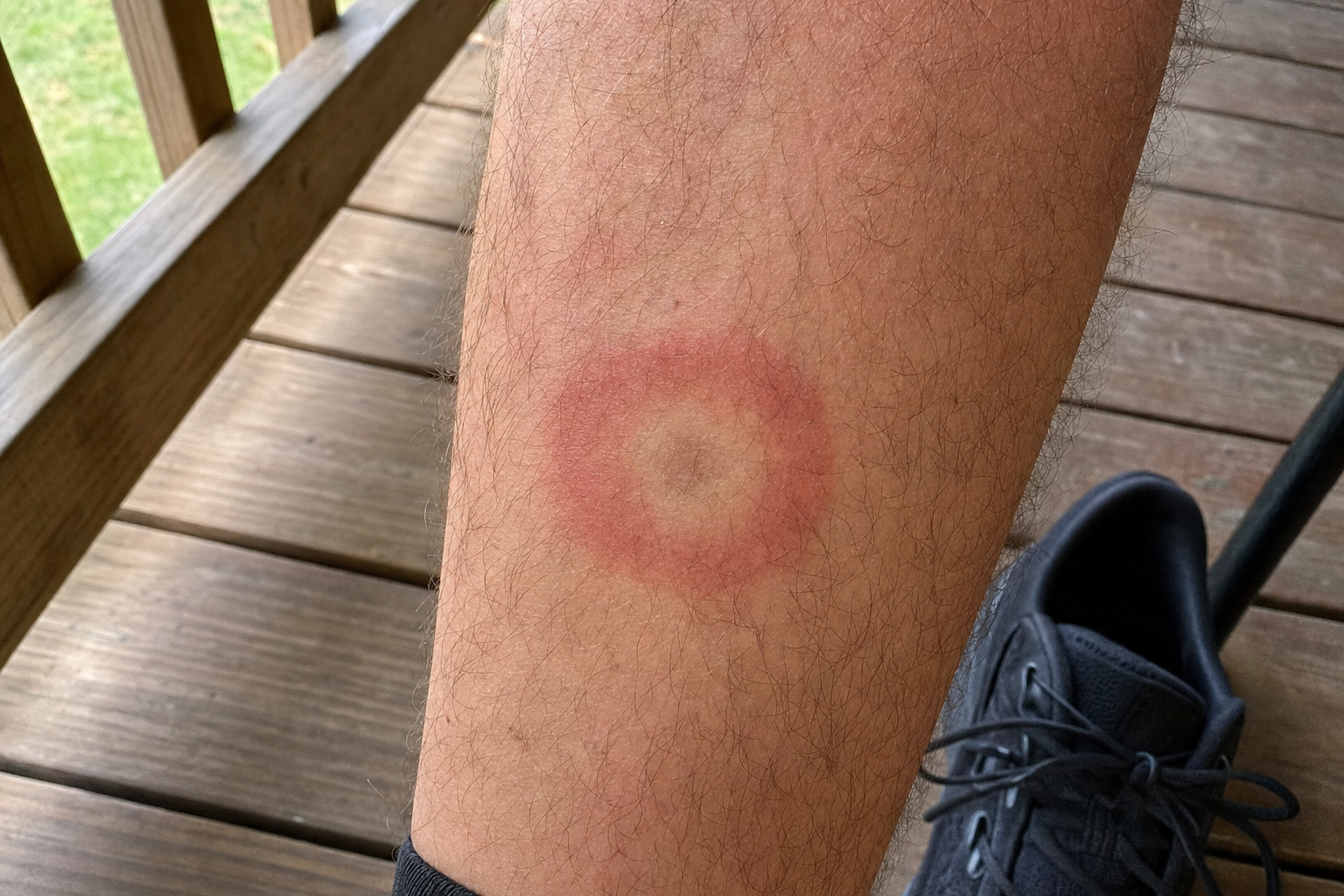
The erythema migrans rash occurs in approximately 70 to 80 percent of infected people, according to the CDC. It begins at the site of the tick bite after a delay of 3 to 30 days, averaging about 7 days, and expands gradually to 12 inches (30 cm) or more.
The rash often clears as it enlarges, giving the classic target or bullseye appearance, and is rarely itchy or painful.
2. Fever
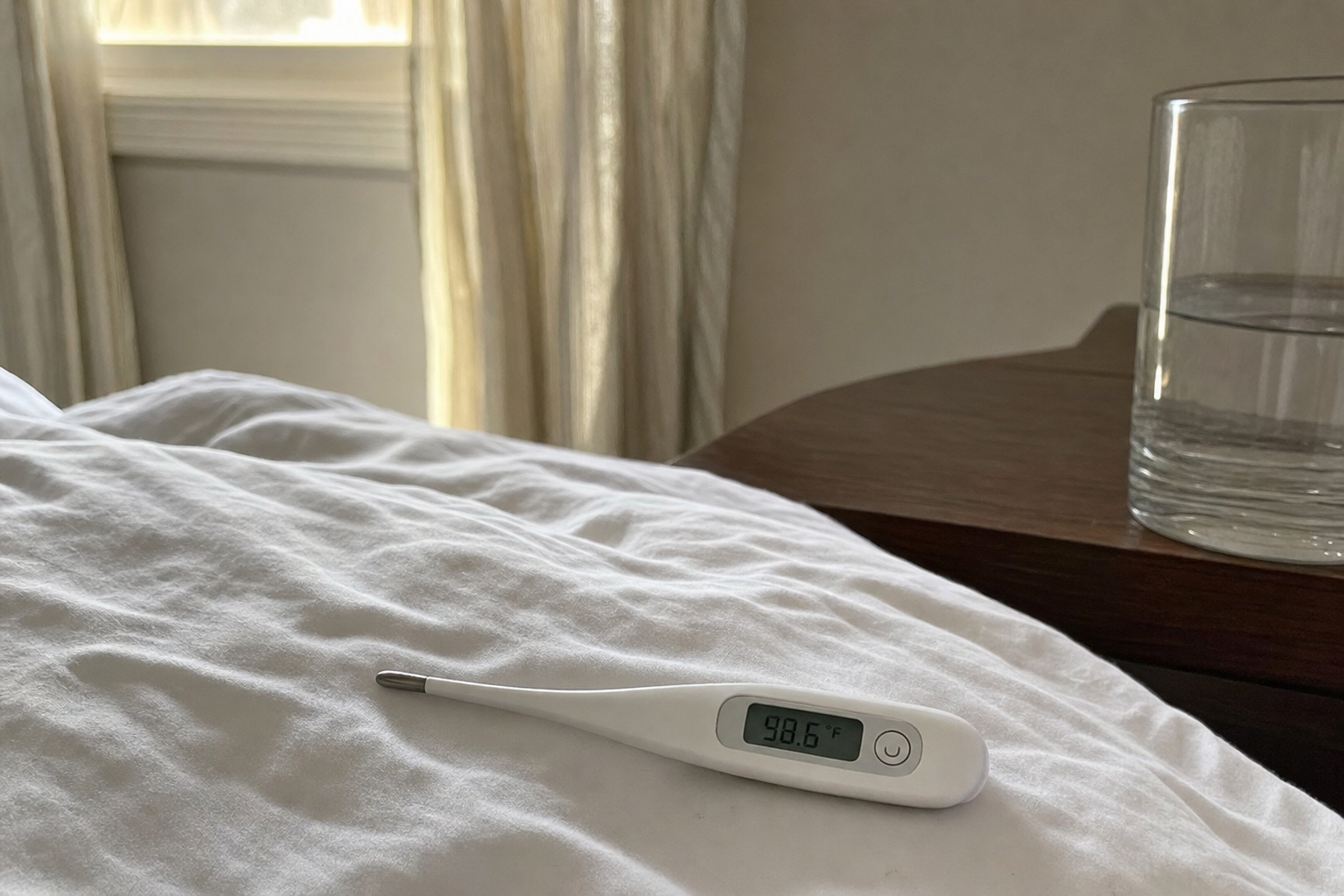
Fever is one of the earliest systemic signs of Lyme disease and typically appears within days of the tick bite. The CDC groups it with the general flu-like onset that often precedes or accompanies the rash.
A low-grade fever that follows outdoor exposure in a tick-prone area is worth noting, even if the skin looks clear.
Also read: A walk may lift your mood as much as a prescription, a sweeping new review suggests
3. Chills

Chills frequently accompany the early fever phase of Lyme disease. The sensation often arrives in waves and feels disproportionate to the room temperature.
The CDC lists chills alongside fever, headache, fatigue, and muscle aches as the cluster of early symptoms that mimic a summer flu.
4. Extreme Fatigue

Deep, unexplained tiredness is one of the most commonly reported early signs. Unlike normal post-exercise fatigue, Lyme-related fatigue tends to linger through the day and is not relieved by a good night's sleep. It can persist for weeks if the infection is not treated.
5. Headache

Headache is listed by the CDC among the first wave of symptoms. Early Lyme headaches are typically dull and persistent rather than migraine-like.
Also read: A routine CT scan may already carry a years-early warning for pancreatic cancer
If the infection progresses, patients may develop severe headaches combined with neck stiffness, a pattern that can signal nervous-system involvement.
6. Muscle Aches

Diffuse muscle pain and body aches often appear in the early phase, resembling the discomfort of a viral illness. The CDC describes intermittent pain in tendons, muscles, joints, and bones as a feature that can persist into the later stages.
Pain that moves around the body without an obvious injury is a notable pattern.
7. Joint Pain or Swelling

Arthritis with severe joint pain and swelling, particularly in the knees and other large joints, is a hallmark of later-stage Lyme disease. The joints may feel warm and swollen, and the pain can shift between joints. Episodes can last days or weeks and may recur if untreated.
Also read: On nights your teen scrolls past 10 p.m., bedtime slips 64 minutes later
8. Neck Stiffness

Severe headache paired with a stiff neck is one of the warning signs the CDC groups with later disseminated Lyme disease. The stiffness can make it uncomfortable to tilt the chin to the chest and may point to inflammation affecting the lining of the brain and spinal cord.
This combination warrants prompt medical evaluation.
9. Facial Palsy or Drooping

Facial palsy, described by the CDC as loss of muscle tone or a droop on one or both sides of the face, is a classic sign of early disseminated Lyme disease. It happens when the bacterium affects the facial nerve and can resemble Bell's palsy.
The droop usually improves with antibiotic treatment, though recovery can take weeks.
Also read: How you drink your daily tea may decide whether it helps or hurts your heart
10. Heart Palpitations or Irregular Heartbeat

Lyme carditis can produce heart palpitations, an irregular heartbeat, or episodes of dizziness and shortness of breath, according to the CDC. These symptoms arise when the infection reaches the heart tissue and interferes with electrical conduction.
Any new palpitations after a possible tick exposure should be evaluated quickly.
11. Numbness or Tingling in Hands or Feet

Shooting pains, numbness, or tingling in the hands or feet are nerve-related signs the CDC lists in the later phase of untreated Lyme disease. Patients may describe a pins-and-needles sensation, electric jolts, or patches of reduced feeling.
These symptoms reflect the infection's spread to peripheral nerves.
12. Cognitive Problems and Memory Issues

Thinking and memory problems can appear in late disseminated Lyme disease. The National Library of Medicine describes cognitive problems, decreased concentration, and memory disorders among potential complications of the third stage.
Patients often describe a mental fog, trouble finding words, or difficulty focusing on familiar tasks.
If you notice several of these signs after possible tick exposure, see a healthcare provider for testing. Most cases of Lyme disease can be treated with 10 days to 4 weeks of antibiotics, and people treated in the early stages usually recover rapidly and completely.
This article is made and published by Aksel Kryhlmand, who may have used AI in the preparation.