
You do not need machines or weights to raise your heart rate.
Using your own body weight, you can strengthen both cardiovascular fitness and muscle strength directly from your living room floor.
Here are nine exercises, along with their benefits and important precautions.
Mountain climbers
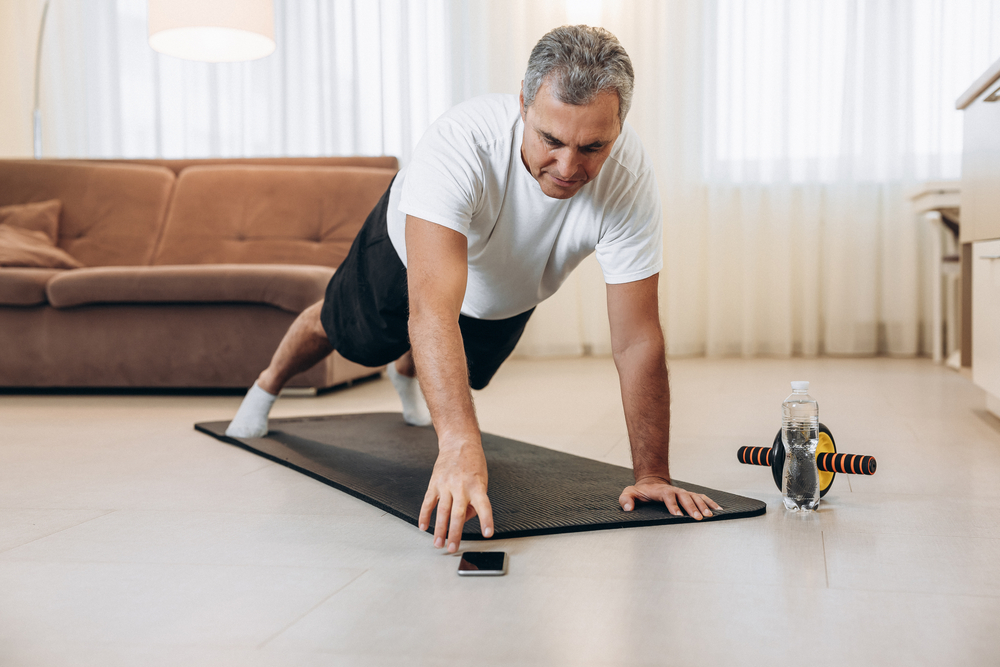
Start in a plank position with your shoulders placed over your wrists and your body in a straight line.
Also read: Depression may be an early sign of Parkinson’s and dementia
Keep your core engaged and your back flat. Alternately draw one knee and then the other toward your chest at a steady or faster pace.
The exercise can be performed without jumping by slowing down and bringing one knee forward at a time.
Burpee
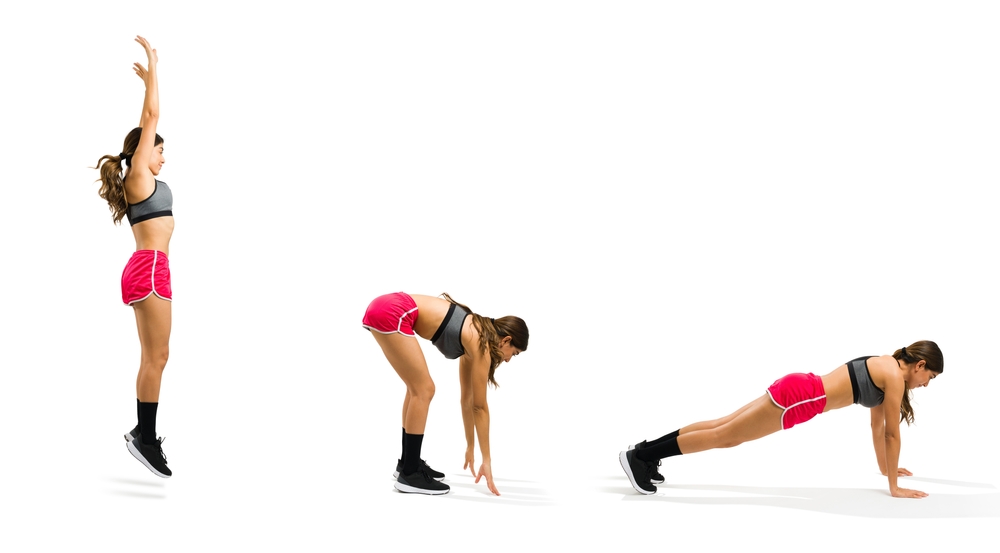
Stand with your feet hip-width apart, place your hands on the floor, and jump or step back into a plank. Jump your feet forward and leap upward with your arms raised overhead.
A slower version involves stepping your feet back and forward without jumping.
Also read: Surgeon: Your toilet routine may disrupt the body’s bacterial balance
Lunge jumps
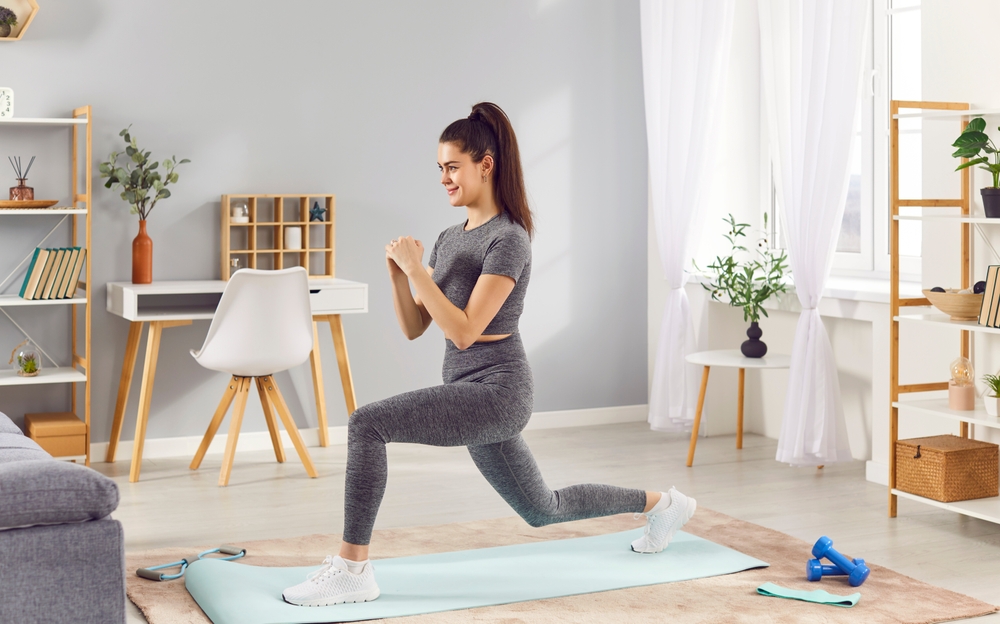
Begin with your feet together. Step one leg back into a lunge with both knees bent at 90 degrees.
Push through the front heel and switch legs midair, landing in a new lunge.
Alternatively, skip the jump and instead lift the back knee forward and lightly kick out in front of your body.
Squat jumps
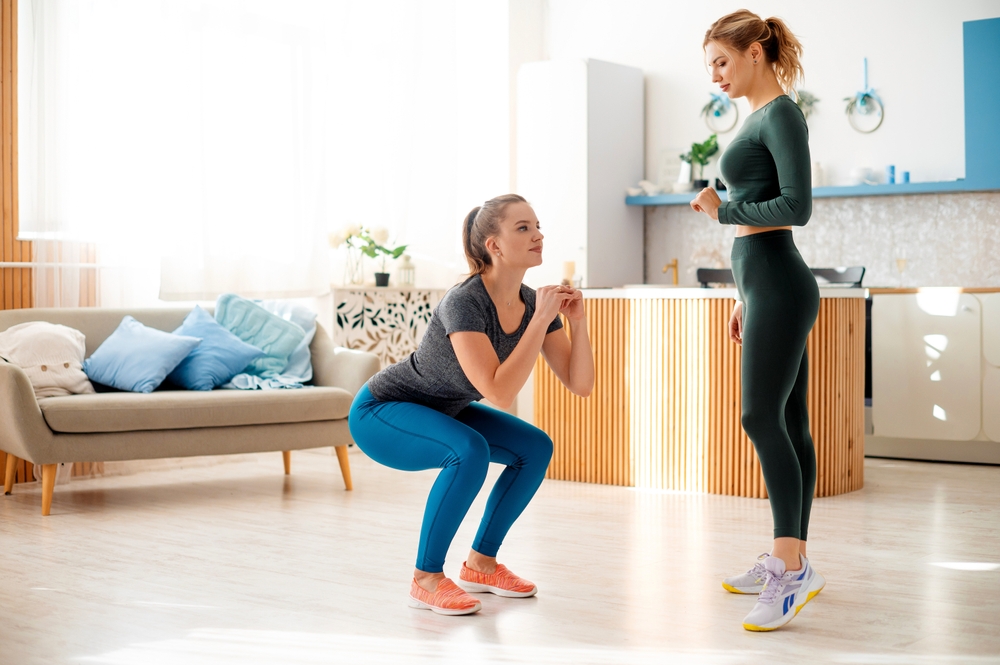
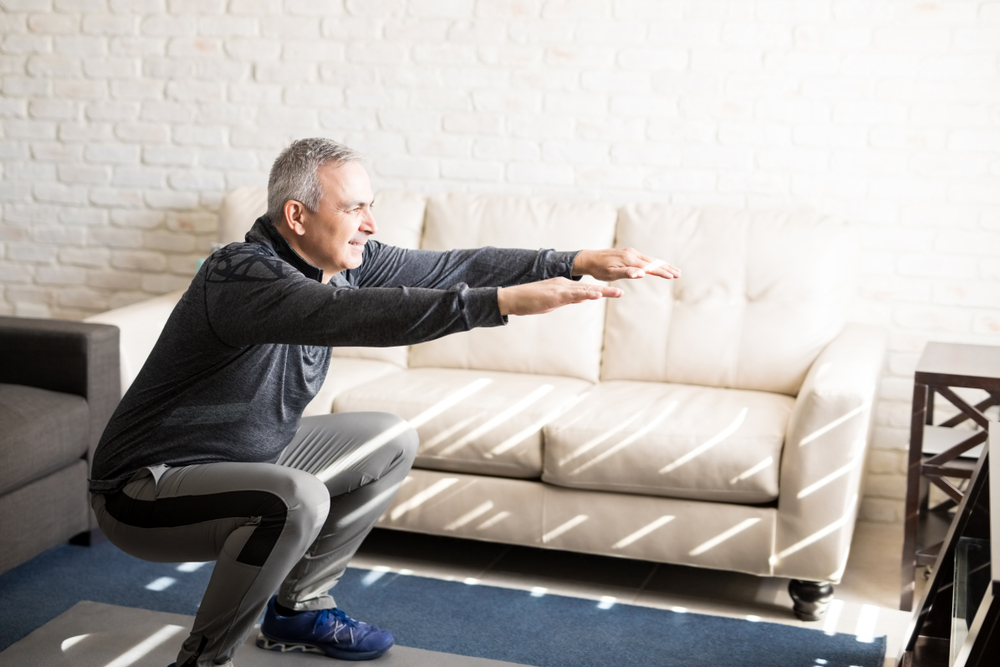
Stand with your feet slightly wider than hip-width apart. Push your hips back and lower into a squat, keeping your weight in your heels.
Also read: Doctors advise caution over certain drinks and blood pressure medication
Jump up explosively and land softly with bent knees, returning to a squat. You can remove the jump and increase the tempo in a regular squat.
Pike ups
Start in a plank and jump your feet inward, lifting your hips into an inverted V shape. Jump back into a plank and repeat the movement.
A gentler version is to walk your feet forward and back instead of jumping.
Skater jumps
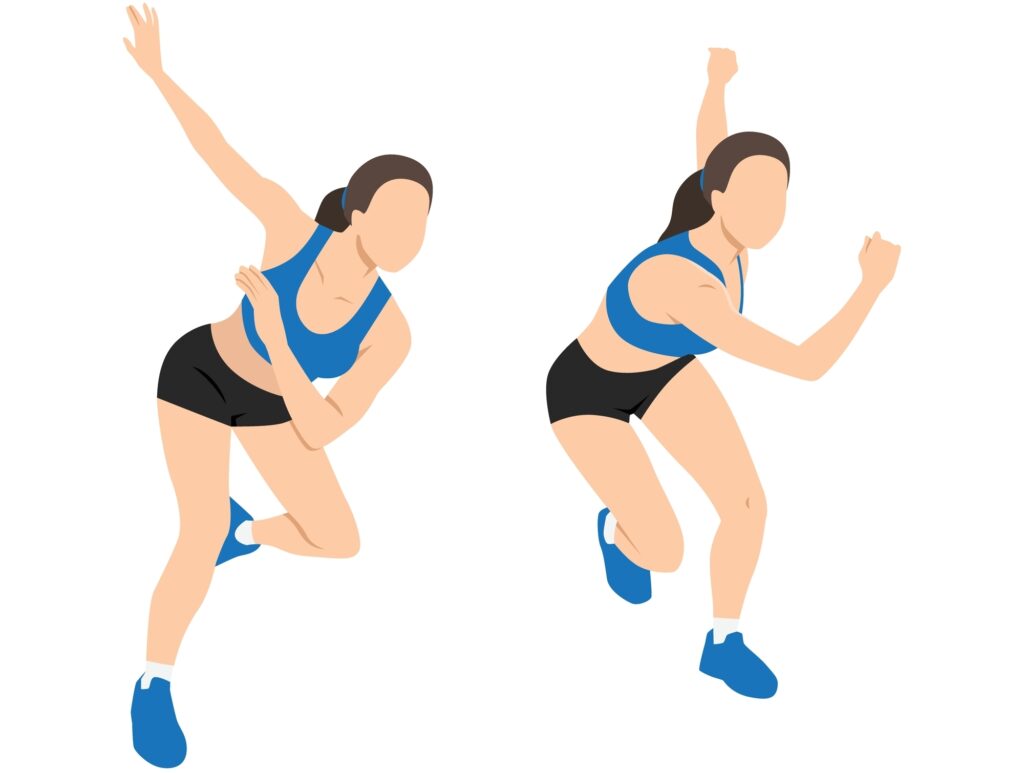
Stand with your feet hip-width apart and jump sideways from one leg to the other with slightly bent knees.
Also read: New structure found to improve how sunscreen appears on the skin
Move the trailing leg diagonally behind you and keep your chest lifted.
For less impact, perform curtsy lunges by stepping the leg diagonally backward without jumping.
Tuck jumps
Lower slightly into a squat and jump up while pulling your knees toward your chest. Land softly with bent knees and repeat.
A modified version begins on your knees, rises into a squat, and returns again without jumping.
Also read: Why cashews are an ideal snack for your health
Lateral hurdle hops
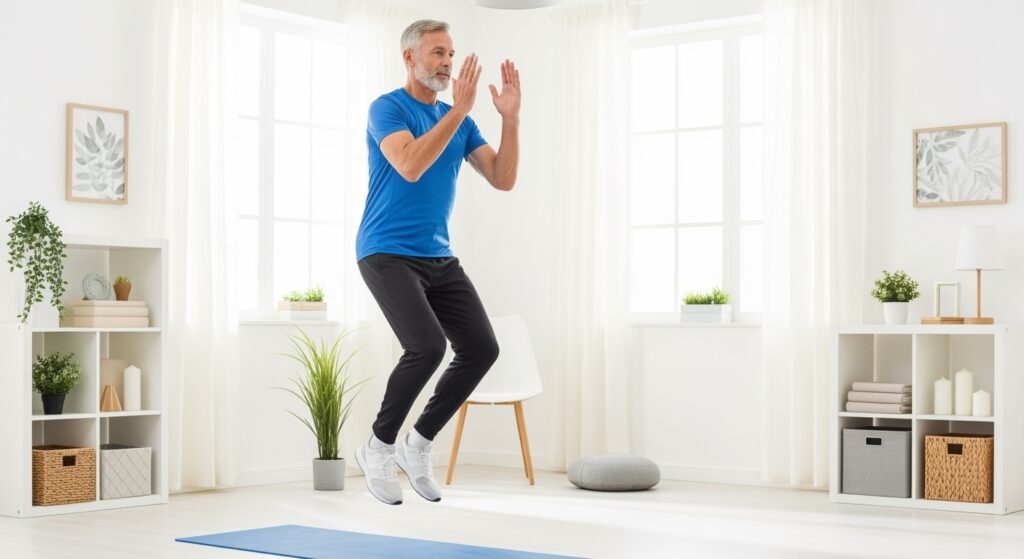
Stand with your feet together and jump sideways over an imaginary obstacle with slightly bent knees. Switch sides after each landing.
Instead, you can step over the obstacle while still lifting your knees actively.
High knees
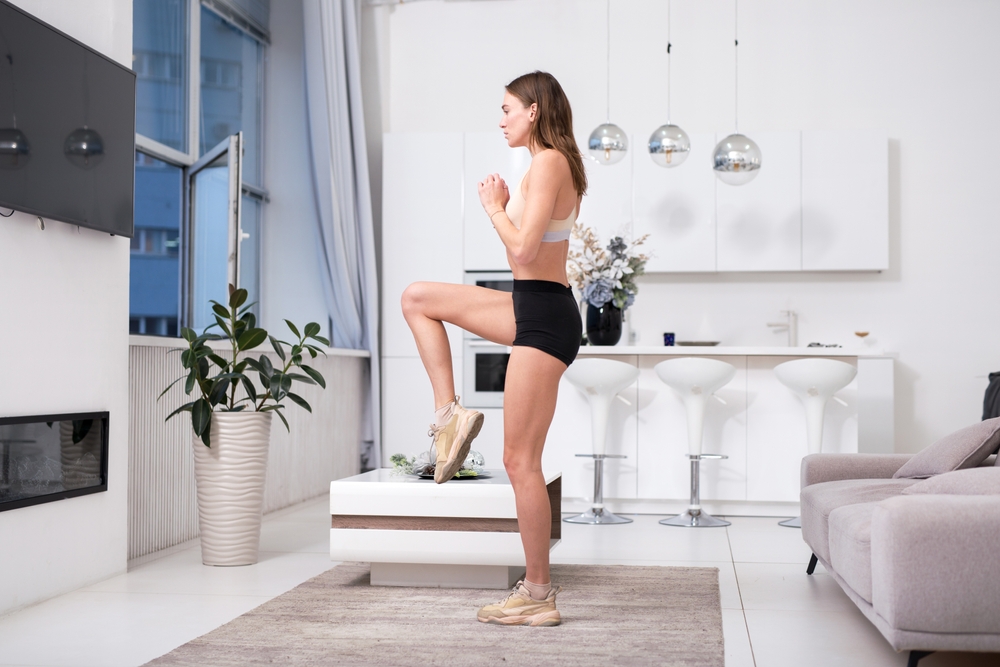
Stand upright and alternately lift your knees toward your chest while moving the opposite arm forward, as if running in place. For a gentler option, march without jumping.
How to structure your workout
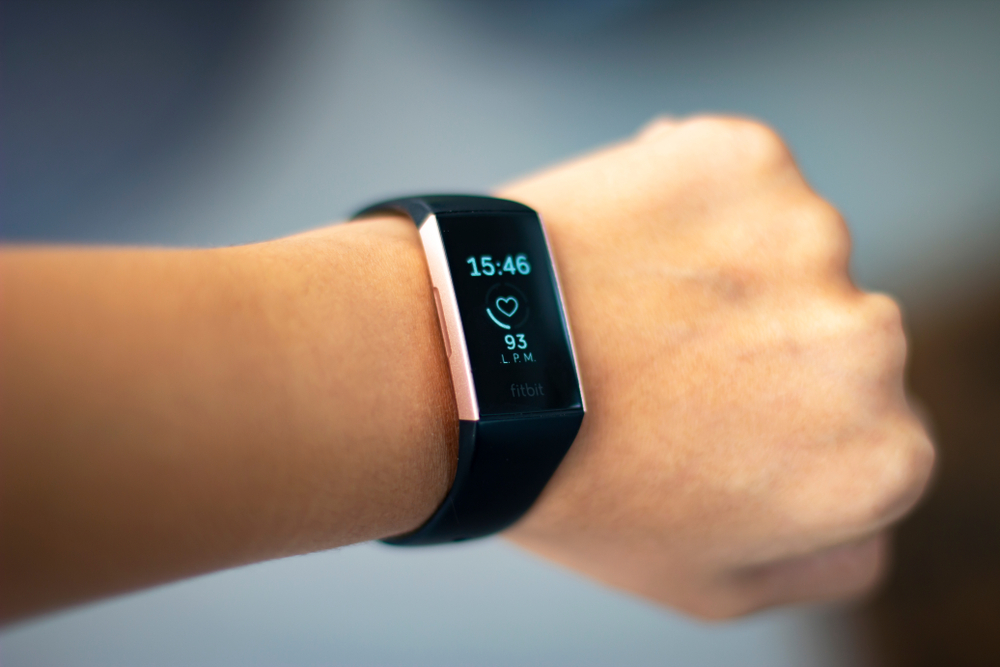
Each exercise is performed for 30 seconds. For high-intensity movements, you can rest for 30 seconds between each exercise.
If you choose versions without jumping, the rest period can be shortened to 15 seconds. Complete two to three rounds with 60 to 90 seconds of rest between each round.
Benefits of cardio

Cardiovascular training can improve endurance, support heart health, promote better sleep, and reduce the risk of diseases such as type 2 diabetes. At the same time, it can enhance your mood.
Why plyometric training works
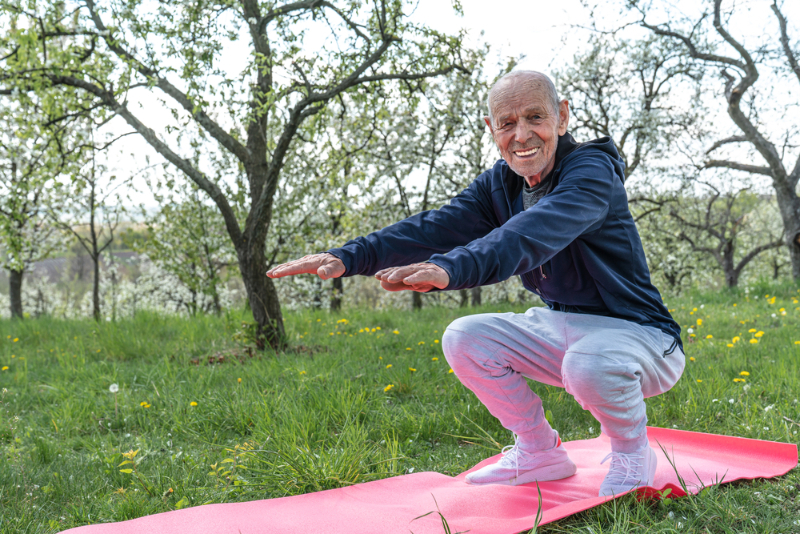
Plyometric exercises use fast and powerful movements that activate muscle fibers designed for short, intense bursts of energy.
Because the effort is maximal in short intervals, this type of training can also save time.
When to be cautious
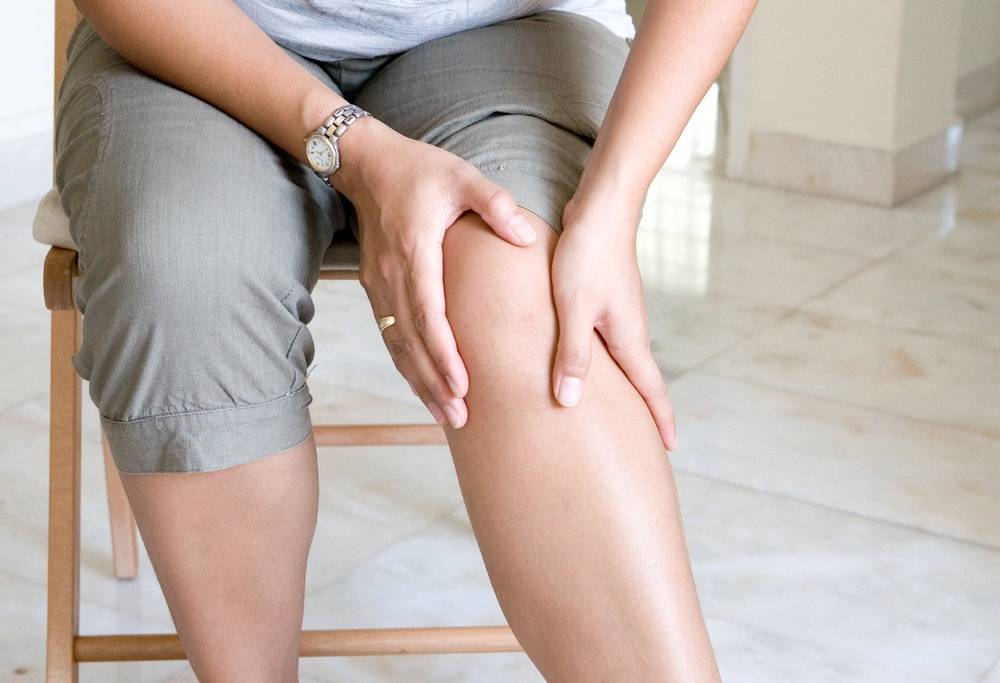
Cardiovascular training is generally safe for most people, but plyometric exercises place significant stress on the joints.
People with acute or recent sprains and strains, inflammation, pain, or recent surgery should consult a physiotherapist before starting.
A doctor can advise on how to perform the exercises without overloading the joints.
Sources: Health.com.