
Feeling overwhelmed is not necessarily just the result of a busy everyday life.
According to author Alex Mathers, certain habits and thought patterns can drain your energy and make it harder to move forward, Findance reports.
You forget your own needs

It can be natural to take care of your partner, family, friends or colleagues.
The problem arises when consideration for others means that your own needs are constantly pushed aside.
Also read: Night owls may carry a mental health burden that morning people do not face
You lack boundaries

It is possible to support others without giving up your own freedom and happiness.
According to Mathers, this requires, among other things, making sure that some of your time is not automatically devoted to other people's plans, feelings and expectations.
You spread your attention too thin

New ideas can be exciting, but constantly switching between projects can make it difficult to finish anything.
Having many unfinished tasks can also drain your energy.
Also read: Drinking orange juice every day may change thousands of your body's genes
You give up when things get difficult

Achieving results often requires sticking with the same task for an extended period.
This may apply, for example, if you want to finish writing a book or become fluent in a language.
You spend energy judging others

It can be difficult to try to understand people who annoy or hurt us.
According to Mathers, however, anger can leave a person feeling more stuck, less creative and less capable of taking action.
Also read: Quitting alcohol may not be enough to heal your liver, research reveals
You confuse understanding with acceptance

Trying to understand another person does not mean that you have to accept their actions.
Empathy is not the same as forgiveness either, but understanding can free up energy that would otherwise be spent on anger.
You expect others to make you happy

If your well-being depends on your partner, family, friends, workplace or society behaving in a certain way, life can more easily begin to feel unfair.
You overlook your own influence

Taking responsibility does not mean that every problem is your own fault.
Also read: Does GLP-1 drugs affect your mental health? A large review offers clarity
According to Mathers, it is about examining what you can do yourself, even when the situation is not perfect.
You hold on to old anger

Forgiveness does not necessarily mean accepting wrongdoing.
According to information from Johns Hopkins Medicine, prolonged anger can keep the body in a persistent state of stress.
You struggle to forgive yourself

Forgiveness can also involve your younger self.
Also read: Running a HEPA air filter at home may sharpen your brain in just one month
Shame over past decisions can keep a person stuck if they do not give themselves the opportunity to grow and leave the past behind.
You constantly try to avoid boredom

Quiet moments can easily be filled with your phone, food, TV shows, shopping, wine or browsing.
According to Mathers, however, there can be value in allowing yourself to experience boredom rather than immediately trying to escape it.
You do not give your mind space
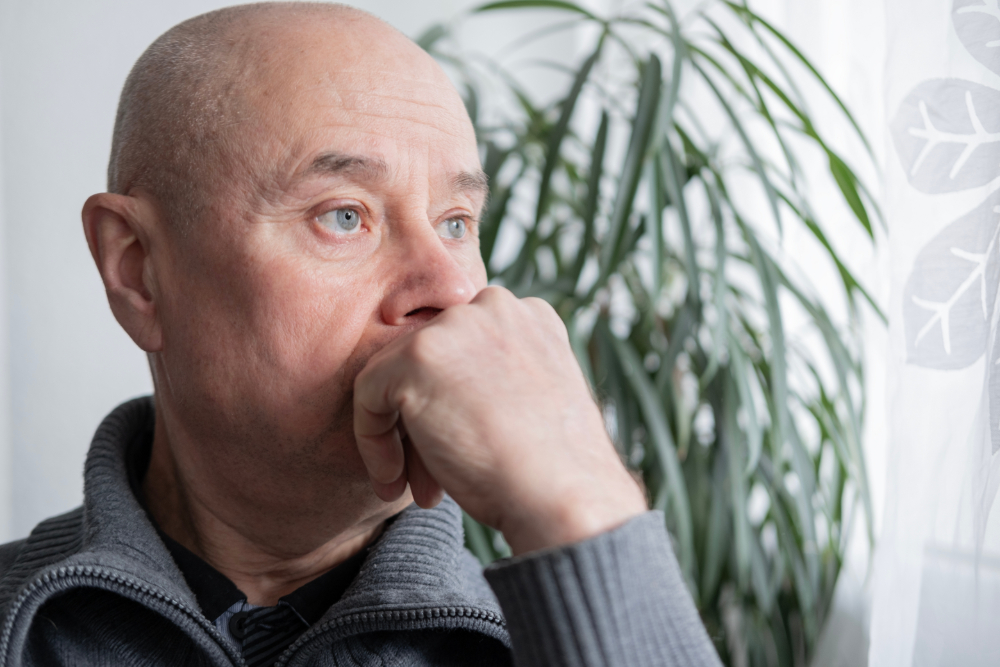
When every empty moment is not immediately filled, it can create room for ideas, insights, rest and a clearer sense of direction.
Research has also described boredom as an emotion that can prompt people to seek new goals and experiences.
You look for one big solution

When you are exhausted, it can be tempting to look for a single decisive change. According to Findance, however, progress often begins with smaller everyday decisions.
You underestimate small changes

Saying no, focusing on one thing, letting go of an old grudge or putting your phone away for a while can all be small steps towards change.
You treat your energy as unlimited

Many everyday problems can begin to ease when you stop treating your energy as an inexhaustible resource.
Feeling stuck can be a sign that some old habits are no longer working.
This article is made and published by Ida-Marie Palm Varbæk, who may have used AI in the preparation.