
A heart attack happens somewhere in the United States every 40 seconds, and about 805,000 Americans have one every year, according to the Centers for Disease Control and Prevention.
Many of those people hesitate before calling for help because the symptoms do not match the dramatic chest-clutching scene they expect.
The National Heart, Lung, and Blood Institute (NHLBI) and other federal sources document a dozen distinct warning signs. Several of them, particularly the ones more common in women, are routinely mistaken for indigestion, muscle strain, anxiety, or the flu.
Below are the twelve signals to recognize, drawn from the NHLBI, CDC, and MedlinePlus.
Also read: Running for the bus may protect your heart and brain more than a long slow walk
If any of these come on suddenly or feel unlike anything you have felt before, do not drive yourself. Call 911.
1. Chest Pressure, Squeezing, or Tightness
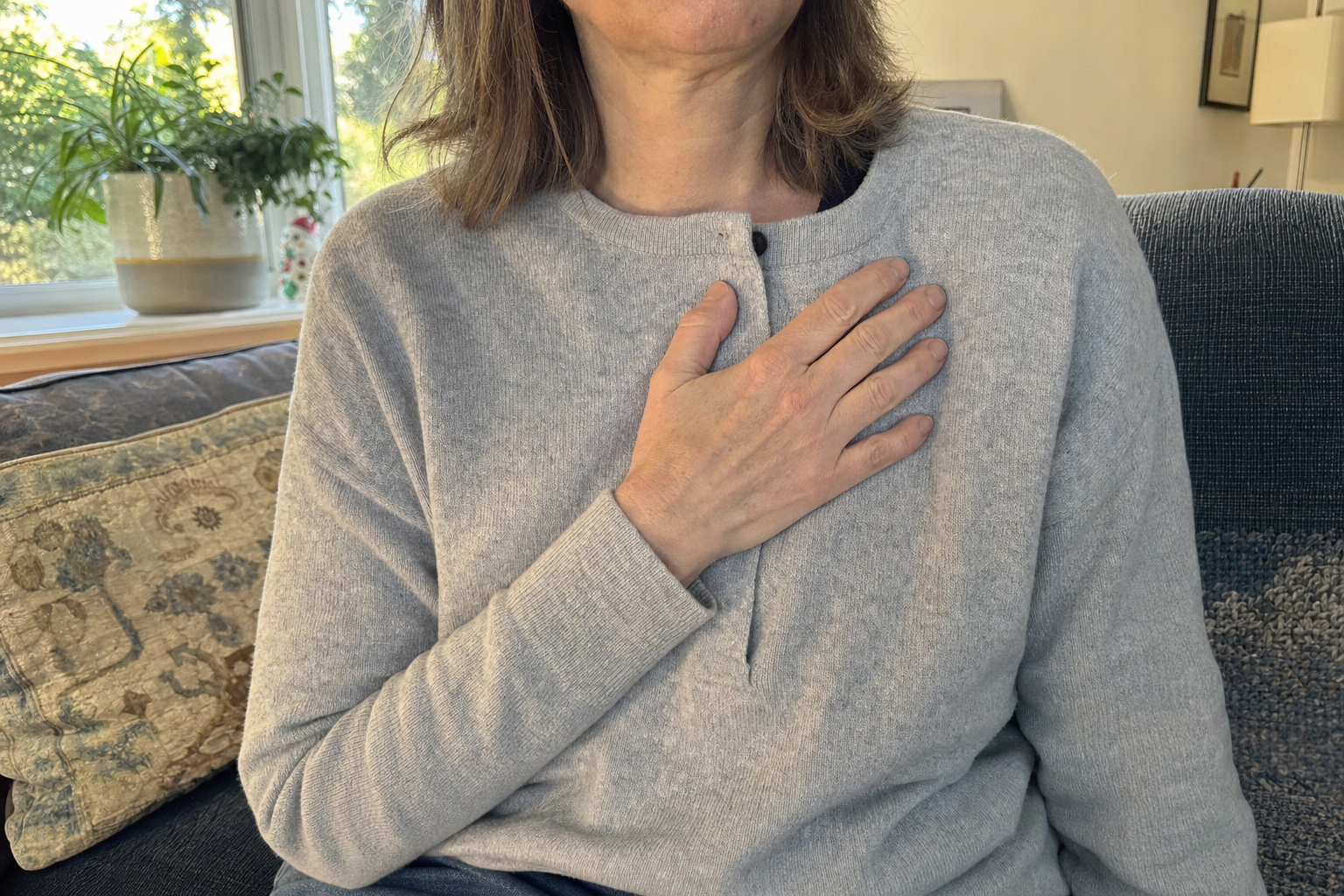
The classic sign is pain or discomfort in the center or left side of the chest that can feel like pressure, squeezing, fullness, or a heavy weight sitting on the chest. According to the NHLBI, the discomfort usually lasts more than a few minutes and may fade and return.
Unlike stable angina, this pain does not go away with rest.
2. Pain Spreading to One or Both Arms

Pain or discomfort can travel from the chest into one or both arms. The NHLBI lists the arms alongside the back, shoulders, neck, and jaw as common radiation points.
Also read: Your gut may now be missing hundreds of bacteria, scientists warn
The feeling is often described as an ache or heaviness rather than a sharp pain, and it can appear without any chest discomfort at all.
3. Shortness of Breath at Rest

Being winded while sitting still or during very mild activity is a serious warning.
The NHLBI specifically notes shortness of breath "when resting or doing a little bit of physical activity" as a symptom. MedlinePlus points out that it is sometimes the only symptom a person notices, appearing before or without chest pain.
4. Cold Sweats Without a Clear Cause

Breaking out in a sudden cold sweat when you are not hot, exercising, or anxious is another red flag. The NHLBI describes it as "sweating a lot for no reason." Sweat during a cardiac event often appears clammy and widespread rather than the warm sweat of exertion.
Also read: Taking Ozempic or Wegovy? These are some of the common sideeffects
5. Nausea or Vomiting

Many people, especially women, mistake a heart attack for a stomach bug. Nausea and vomiting are listed as symptoms by the NHLBI, and this is one reason heart attacks in women are frequently missed in the first critical hour.
6. Jaw or Neck Pain

Pain radiating up into the jaw, teeth, or neck is one of the more surprising cardiac signals. MedlinePlus notes that heart attack pain "may move from your chest to your arms, shoulder, neck, teeth, jaw, belly area, or back."
Dental or sinus pain that comes on suddenly without a dental cause can occasionally be the heart calling for help.
7. Upper Back Pain

Pain between or just below the shoulder blades can be a referred cardiac symptom, particularly in women. The back appears in the NHLBI's list of places where heart attack discomfort can radiate.
Also read: Your coffee ends up in your breast milk
It is easily mistaken for a muscle pull, especially when it is not accompanied by chest pressure.
8. Unusual Fatigue Lasting Days

Deep, unexplained exhaustion that lasts for days before a heart attack is one of the most common pre-event symptoms in women. The NHLBI states that "feeling unusually tired for no reason, sometimes for days" is "more common in women."
It is often dismissed as stress or poor sleep until a more acute symptom appears.
9. Lightheadedness or Sudden Dizziness

A sudden feeling of lightheadedness or near-fainting can signal that the heart is not pumping enough blood to the brain. The NHLBI lists "light-headedness or sudden dizziness" among the warning signs.
Also read: Butter and cheese may not be as unhealthy as we thought, new research suggests
If dizziness arrives alongside sweating, nausea, or chest discomfort, the combination is particularly concerning.
10. Rapid or Irregular Heartbeat

A sudden racing, pounding, or fluttering sensation in the chest, especially one that does not settle, can accompany a heart attack. The NHLBI explicitly includes "rapid or irregular heartbeat" in its symptom list.
Palpitations alone are often harmless, but when they appear with any other symptom on this list they are not to be ignored.
11. Pain Above the Belly Button
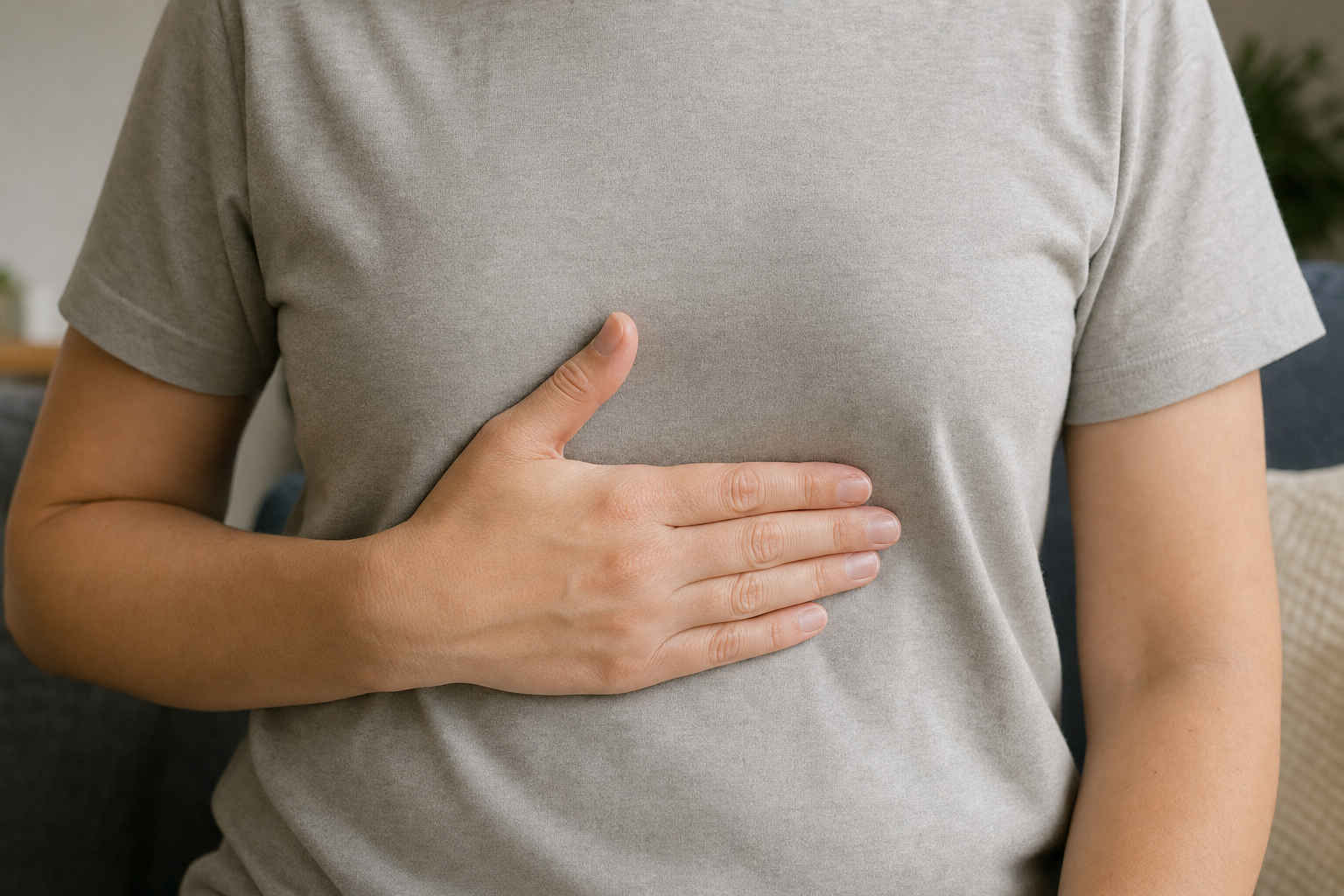
Heart attack discomfort can present as pain or burning in the upper abdomen, right above the belly button, which is why it is so often blamed on heartburn or indigestion. The NHLBI's symptom list includes pain "above your belly button" as one of the radiation points.
Antacids will not touch it.
12. A Sudden Sense That Something Is Wrong

A striking symptom reported by many heart attack survivors is a sudden feeling of dread or that something is seriously wrong. The Cleveland Clinic lists "anxiety or feeling like something bad is going to happen" among heart attack symptoms. Trust that instinct.
The CDC and NHLBI both emphasize that calling 911 at the first suspicion, rather than driving yourself, gives you the best chance of surviving and recovering.
This article is made and published by Aksel Kryhlmand, who may have used AI in the preparation.