
A weak and untrained back is one of the leading causes of back pain and poor posture. But how strong should your back be for your age? This simple test will help you assess your back strength and determine if it’s time to start strengthening your muscles.
How to Measure Your Back Strength

This endurance-based test will help you determine how well your back muscles support your posture and spinal stability. Here’s how to do it:
- Lie flat on your stomach with your arms resting alongside your body.
- Lift your head, chest, shoulders, and arms slightly off the ground. Keep your neck aligned with your spine by looking straight down.
- Start the timer as soon as you are in position.
- Hold this position for as long as possible while breathing steadily.
- Stop the test when you can no longer maintain the position.
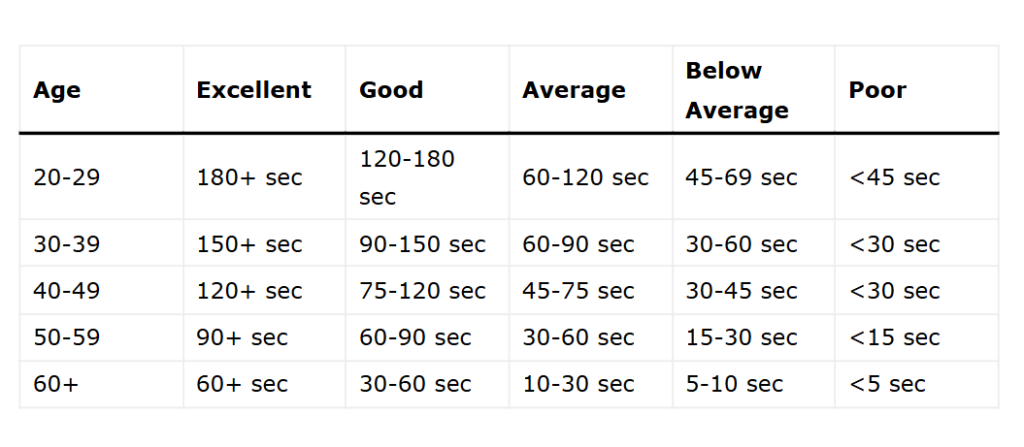
Back Strength Levels by Age
Compare your results to the table below to see how your back endurance compares to the average fitness levels for your age.
Why Back Strength Matters

A strong back protects your spine, reduces pain, and improves posture. It also makes everyday activities like lifting, bending, and standing for long periods much easier.
Factors That Affect Back Strength

- Sedentary Lifestyle: Sitting for long hours weakens the back muscles.
- Age: Muscle loss occurs naturally with age, making strength training even more important.
- Core Stability: Weak abdominal muscles can put extra strain on the back.
- Posture Habits: Poor posture can contribute to back discomfort and muscle imbalances.
How to Strengthen Your Back

If your score was lower than expected, try incorporating these exercises into your routine 2-3 times per week:
- Superman Hold: Strengthens the lower back and core.
- Deadlifts: Builds overall back strength and stability.
- Rows: Strengthens the upper and mid-back muscles.
- Reverse Plank: Improves endurance and spinal support.
- Back Extensions: Directly targets the lower back for better posture.
Signs Your Back Needs Strengthening

If you experience chronic lower back pain, poor posture, or difficulty lifting objects, these could be signs that your back muscles need improvement.
How Long Does It Take to Strengthen Your Back?

With regular training, noticeable improvements can be seen in 4-6 weeks. Retake the test monthly to track your progress.
The Link Between Back Strength and Posture

A strong back keeps your spine aligned, preventing slouching and reducing stress on the lower back. Strengthening your back muscles can dramatically improve your posture over time.
Want a Challenge? Try These Variations

- Weighted Back Extensions: Add extra resistance for advanced strengthening.
- Superman Repetitions: Instead of holding, raise and lower your upper body for reps.
- Reverse Hyperextensions: Strengthen the lower back and glutes for extra support.
Make Back Training a Priority

Back strength is essential for overall health and mobility. Make sure to incorporate back-focused exercises into your weekly routine to prevent pain and improve overall strength.
This article is based on information from I FORM.
This article is made and published by Mie Hermansen, who may have used AI in the preparation.