
Age-related changes in balance, muscle weakness, and vision problems can increase the risk of falls in older adults.
Regular exercise focusing on strength, balance, and cardio can help reduce this risk.
Here are some exercises that can reduce your risk of falling.
Weight shifting
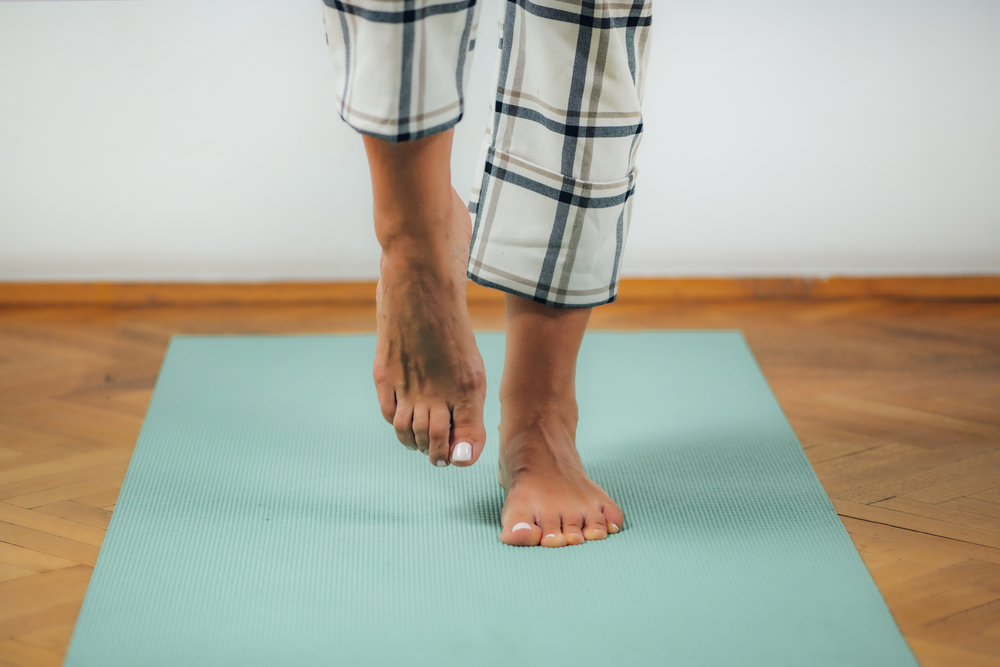
Stand with your feet hip-width apart and shift your weight to one side while lifting the opposite foot. Hold for about 30 seconds, then switch sides. Use support if necessary.
Also read: New Research Reveals How Dogs Shaped Family Life During Corona
One-leg balance
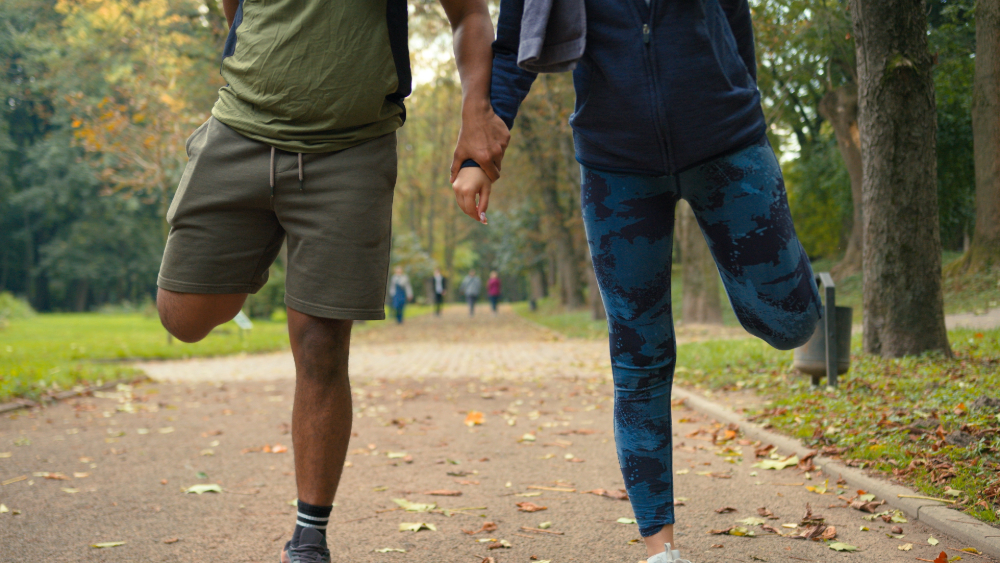
Stand with your feet hip-width apart, bend one knee, and lift your leg.
Hold the position for up to 30 seconds before switching sides. Use a wall or chair if you feel unsteady.
Heel-to-toe walk
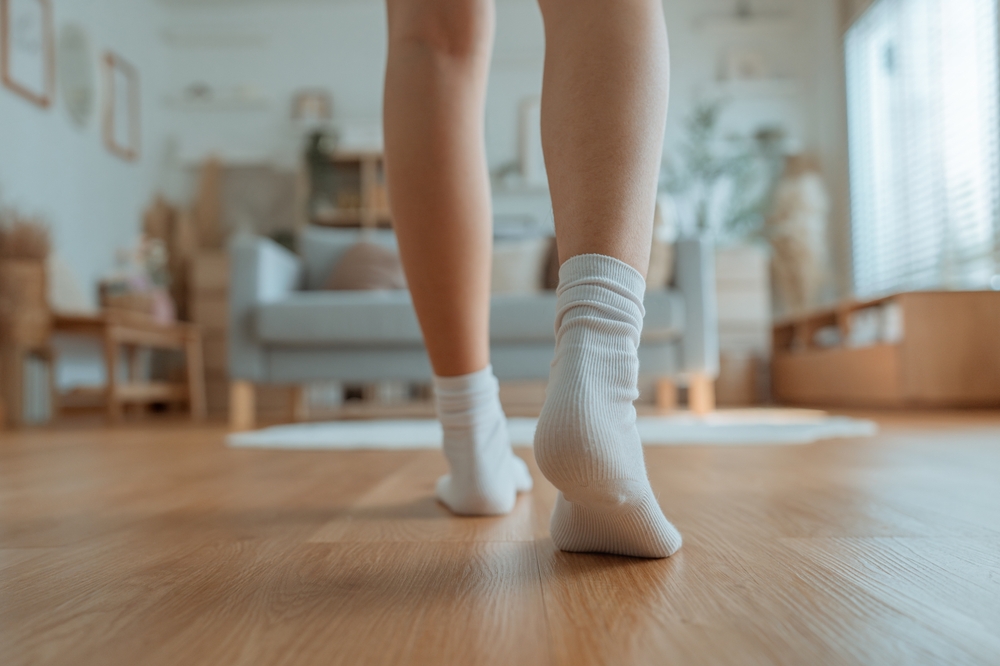
Extend your arms and keep your eyes focused straight ahead.
Walk forward by placing the heel of one foot directly in front of the toes of the other. Take 10 to 20 steps.
Also read: Safe and Effective Training for Seniors with Physical Limitations
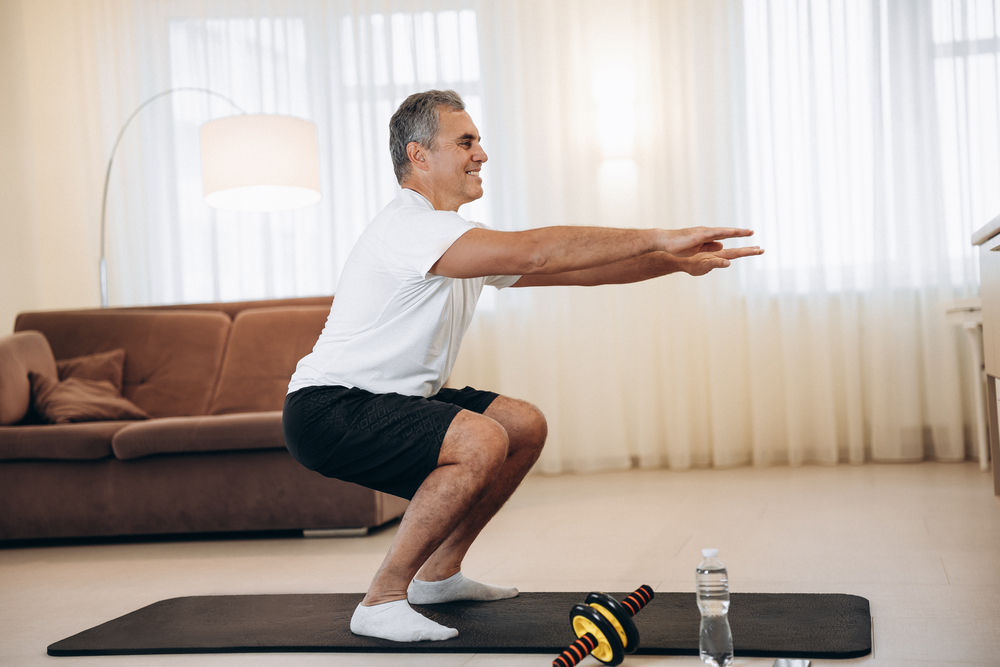
Squats
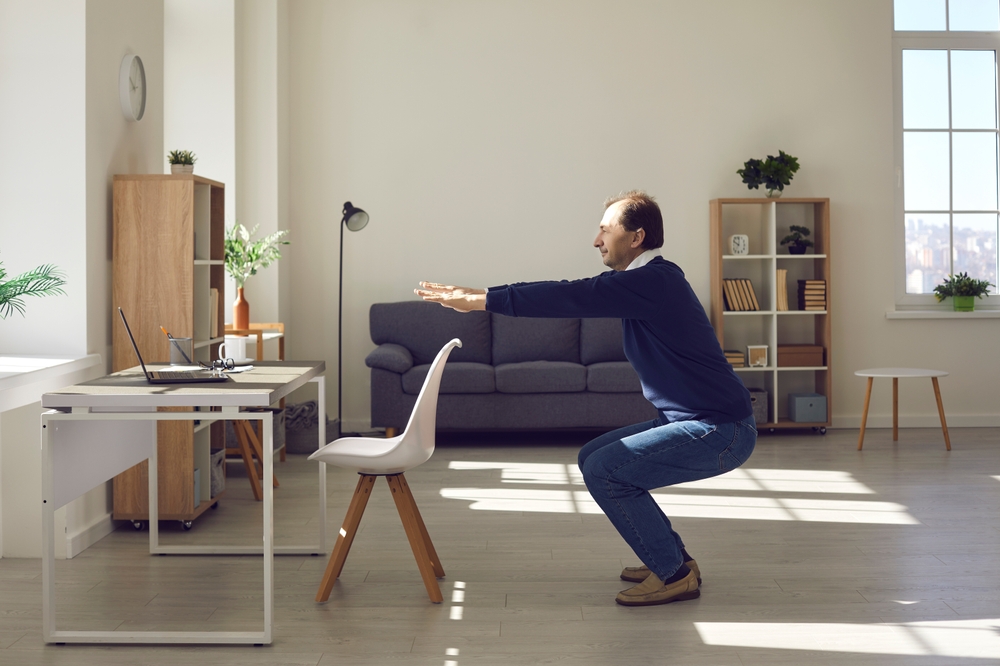
Stand in front of a sturdy chair with your feet slightly wider than shoulder-width.
Lower yourself slowly toward the chair on a 4-count and rise again on a 2-count, keeping your back straight and knees aligned.
You can either hold on to the back of the chair or sit down directly on the chair if that feels more comfortable for you.
Wall push-ups
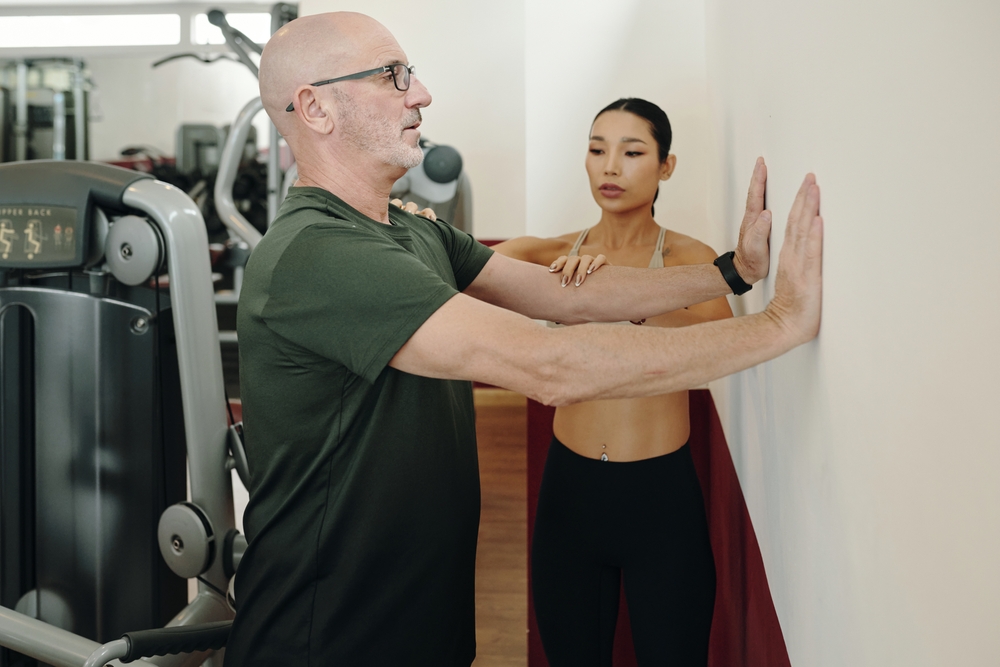
Stand an arm’s length away from a wall with your hands at shoulder height.
Also read: Can Delaying Morning Coffee Boost Your Health?
Bend your elbows slowly on a 4-count to move closer to the wall, then push back to straight arms without locking your elbows.
Toe stands
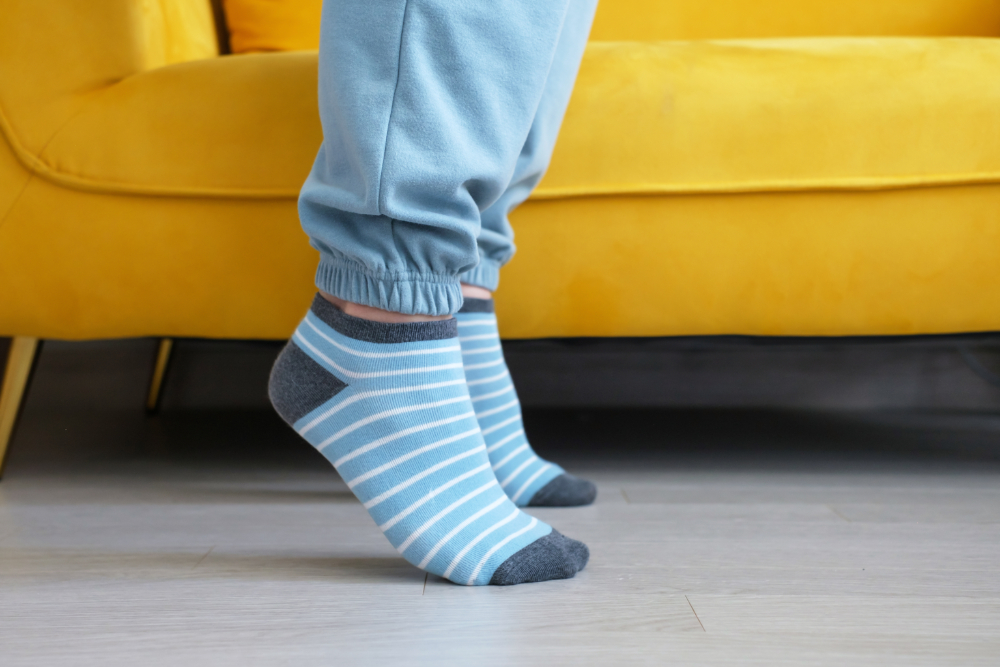
Stand with your feet shoulder-width apart near a support. Rise onto the balls of your feet for 4 counts, hold for 2–4 seconds, then lower your heels slowly back down.
Walking
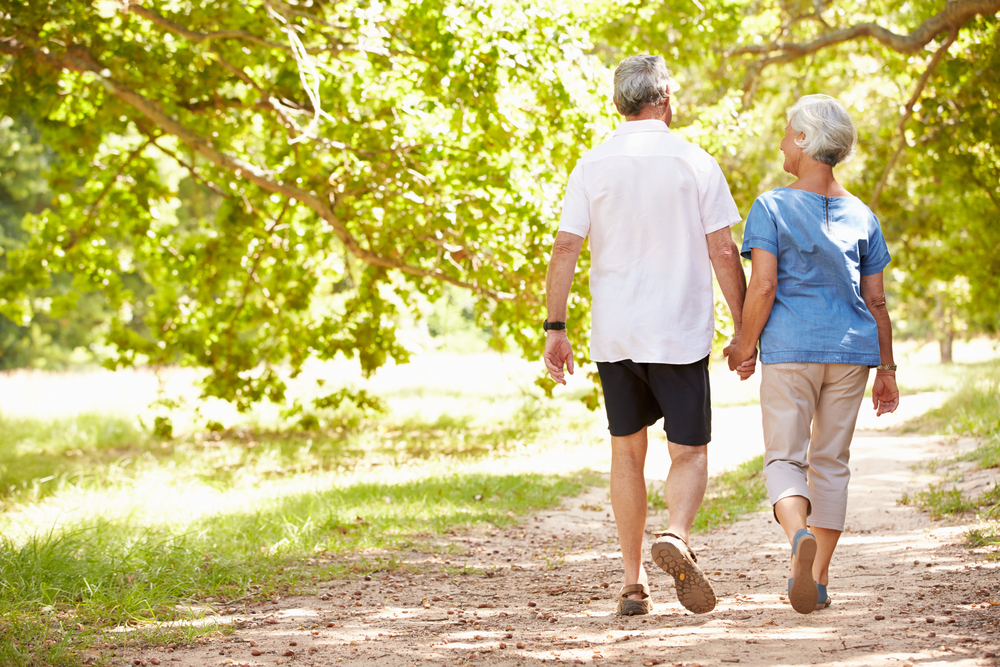
Though simple, walking is both a balance and aerobic exercise. Even a 15-minute walk a few times a week can improve stability and fitness.
Indoor locations like gyms or malls are good options in bad weather.
Also read: Surprising Places Where Bacteria Thrive – And Simple Fixes
Additional exercises
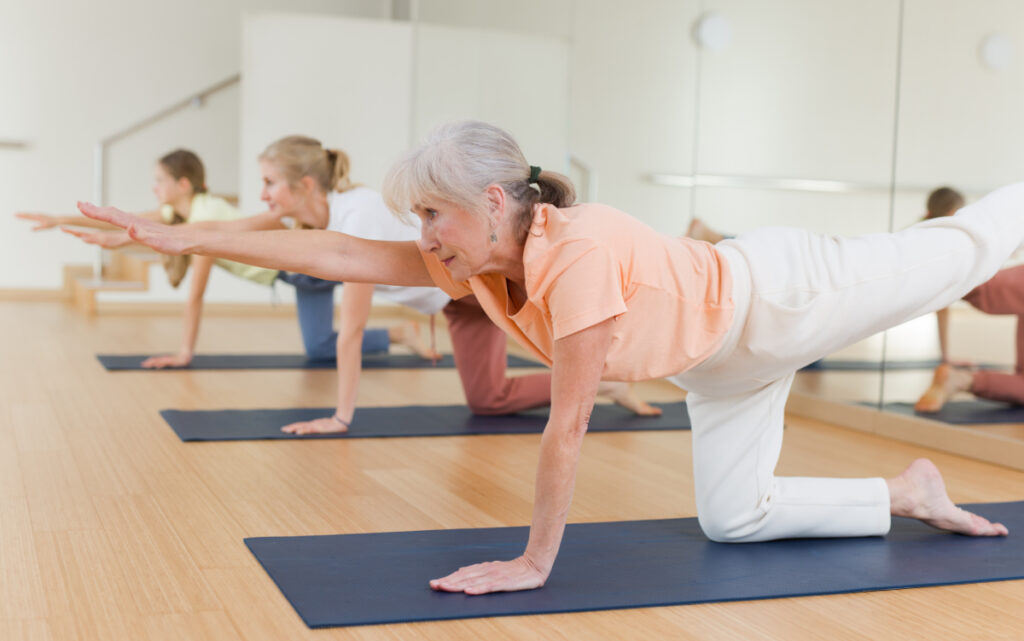
Complement your routine with marching in place, sideways walking, stepping over objects, or practices like yoga and tai chi, which all enhance balance and coordination.
Home safety adjustments
Create a safer living environment by adding more lighting, securing rugs, placing non-slip mats on stairs, removing clutter, and installing grab bars where needed.
Lifestyle strategies

Schedule regular checkups with your doctor, monitor your vision and bone density, and ensure you get enough sleep.
Review medications with your healthcare provider, and consider supportive equipment such as canes or walkers for added stability.
Also read: Practical Ways to Prevent Mold Growth Inside Your Home
This article is based on information from Healthline.com.
This article is made and published by Ida-Marie Palm Varbæk, who may have used AI in the preparation.