
We rarely talk about death – and when we do, it’s often with fear and discomfort.
But according to experts, death is not a disaster; it’s a natural, physical process.
Understanding what happens to the body in the final days and hours can ease much of the fear surrounding it.
The body begins to withdraw

Months before death, the body starts a quiet retreat. The dying person spends more time in bed, eats and drinks less, and needs more help with everyday tasks.
Also read: This Happens to Your Liver When You Drink Coffee Every Day
Sleep dominates the day, and conversations become harder to follow.
The senses begin to dull
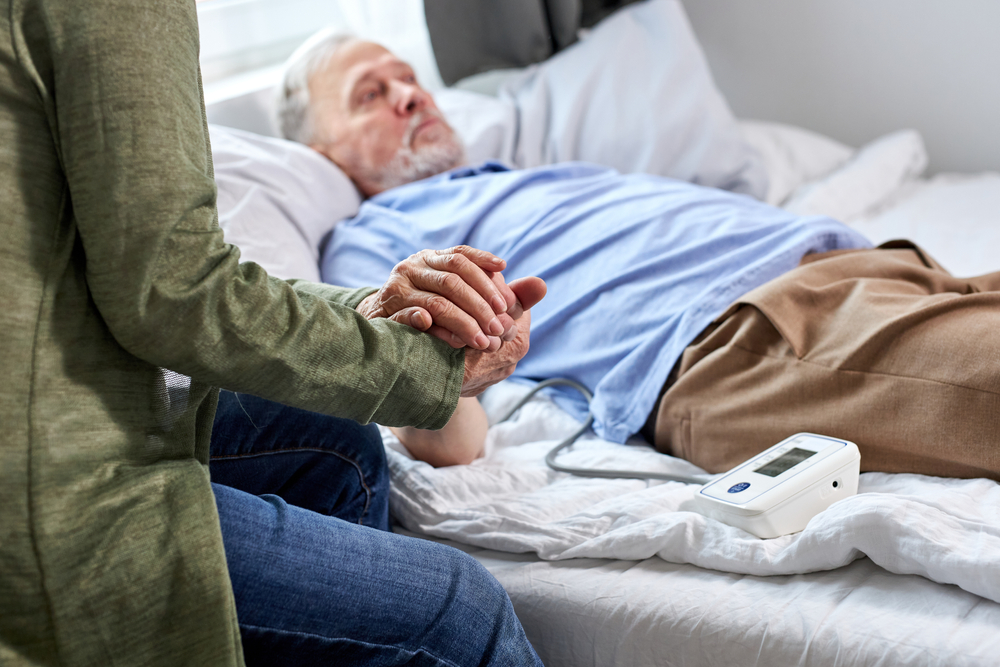
During what’s called the transition phase, the dying person’s connection to the outside world fades.
Sight, hearing, taste, smell, and touch all become less sharp. There’s often a sense of timelessness, where the usual rhythm of day and night loses meaning.
The body enters ketosis

As food and drink intake drops, the body switches to burning fat – a state known as ketosis.
Also read: The Most Overlooked Trick for Women's Pain Relief? It’s on Your Leg
Surprisingly, this can bring feelings of euphoria or pain relief, possibly because of increased GABA (a calming brain chemical) and reduced cortisol (the stress hormone).
The active dying phase begins

In the final days – or hours – the process speeds up.
Known as "active dying", this phase is marked by unconsciousness and irregular breathing and heartbeats. The body is slowly shutting down.
Music can help stabilize vital signs

A special type of caregiver known as a music-thanatologist may be called in.
Also read: Drink Your Way to a Healthy Liver Using Only Ingredients from Home
They play the harp and sing at the bedside, helping regulate the body’s rhythms and ease anxiety in the final moments.
The final surge

About a third of dying people experience a last burst of clarity.
They wake up, become mentally alert, recognize loved ones, and may crave their favorite food – often just hours before death.
Visions and hallucinations are common

It’s perfectly normal for the dying to report seeing deceased relatives or talk about "packing for a trip" or "waiting at an airport".
Also read: Why Danes Sleep Better Than You – and How You Can Do the Same
These experiences are often comforting and part of the brain’s end-of-life process.
The death rattle isn’t painful

The infamous "death rattle" is caused by a buildup of saliva and mucus the person can no longer swallow.
Although it sounds alarming, experts say it’s not painful – just one of the body’s final responses.
Dying people communicate without words

Just like babies express discomfort without speaking, so can dying people.
Also read: Here’s the Optimal Time of Day to Take a Shower
Skilled hospice nurses read facial expressions, breathing patterns, and body language to understand and respond to their needs.
Death literacy brings peace

The more we understand death, the less we fear it.
Experts call this "death literacy" and research shows that learning about the dying process gives people a sense of control and comfort during life’s final chapter.
This article is based on information from The Guardian.
This article is made and published by Ida-Marie Palm Varbæk, who may have used AI in the preparation.